Introduction
Artificial intelligence is fundamentally reshaping the way organizations operate, innovate and scale. As the technology matures, the focus for business leaders has shifted from early experimentation to the complex task of embedding and scaling AI across the enterprise. Understanding how Chief Human Resources Officers (CHROs) are navigating this transition is critical for organizations seeking to unlock the full value of AI.
To provide a clear picture of where leading companies stand, we surveyed 750 C-level executives within our communities from a diverse range of roles, industries, and global regions. This report builds on our previous surveys, which examined the initial impact of generative AI in 2023 and the early phases of enterprise AI adoption in 2024. Our latest survey explores how executive attitudes, priorities, and challenges have evolved as organizations move beyond pilots and proofs of concept toward operationalizing AI at scale.
In the following pages, we present five significant trends from this year’s survey. We also offer focused analyses for CHROs to highlight how people leaders are approaching the opportunities and obstacles of AI transformation. This report offers CHROs the ability to benchmark their progress, anticipate emerging challenges, and chart a path forward in the rapidly evolving AI landscape.
Trend 1: AI Moves from Experimentation to Operational Execution
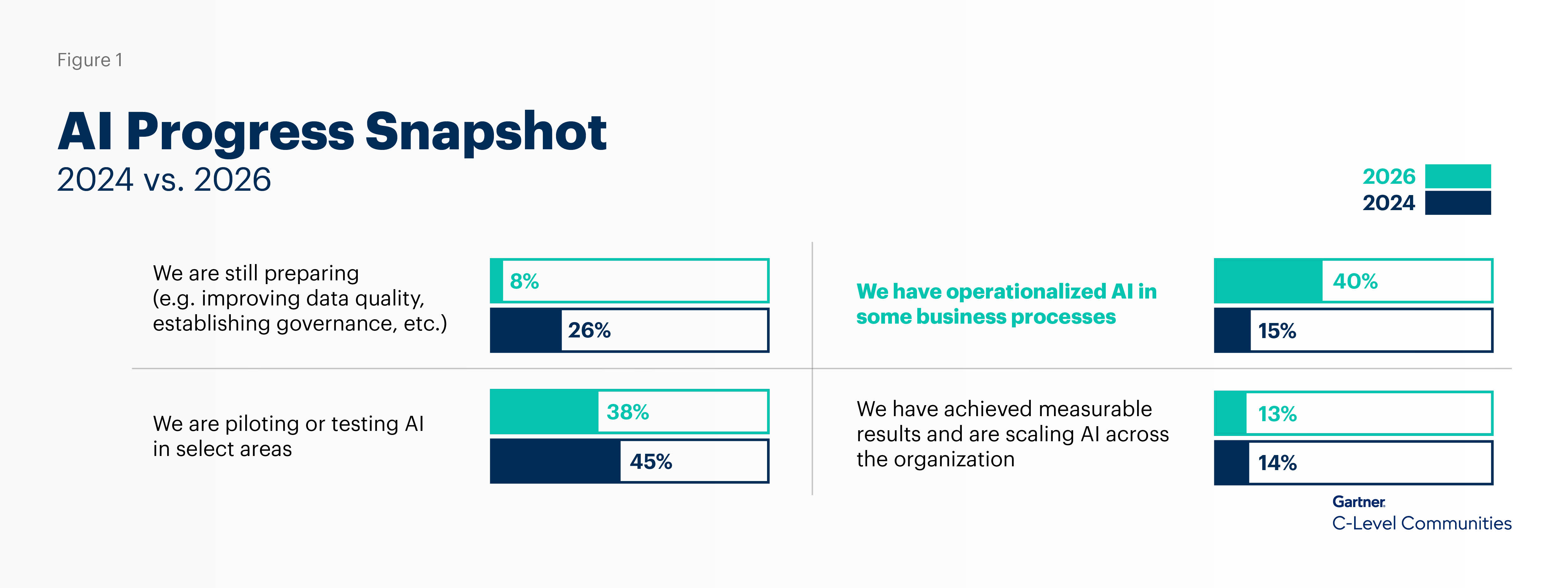
Organizations continue to make steady progress in AI maturity. Most have moved beyond the preparation phase and are now focused on piloting, testing, and operationalizing AI initiatives. Forty percent of organizations report that they have operationalized AI in select business processes, while another 38% are actively piloting or testing AI in specific areas. Only 8% remain in the preparation phase, concentrating primarily on foundational capabilities, such as data quality, governance, and infrastructure.
Compared with our survey from 2024, this marks a significant shift. Fewer organizations describe themselves as "still preparing," while a greater share have successfully moved AI into production environments. However, despite two years of rapid investment and experimentation, enterprise-wide scale remains limited. Only a small percentage of organizations report broadly scaling AI across the business, highlighting the ongoing challenge of moving from successful pilots to widespread implementation.
When asked about their primary AI strategy, CHROs are prioritizing the integration of AI into existing workflows and business processes (40%). Another 20% are focused on creating new processes or business models enabled by AI, closely followed by those using AI to support data-driven decision making (19%). Interest in agentic AI is also on the rise, with 12% of CHROs experimenting with this emerging technology, though adoption is still in its early stages.
Importantly, qualitative responses indicate that HR leaders do not see these strategies as mutually exclusive. Many report pursuing multiple approaches simultaneously – a pragmatic effort to deliver value today while building for broader transformation tomorrow. As one CHRO put it, “First and foremost, we’re revisiting existing processes and standards, eliminating waste and ensuring the foundations are strong before we scale AI.”
Trend 2: Change Management, AI Governance, and Talent Gaps Limit AI Scale
The greatest barriers to scaling AI are no longer about whether to adopt the technology, but how to do so responsibly and effectively. While organizations are making strides in operationalizing AI, executives report that enterprise-wide adoption remains hindered by persistent challenges – namely, AI governance, data quality, talent and skills gaps, and change management.
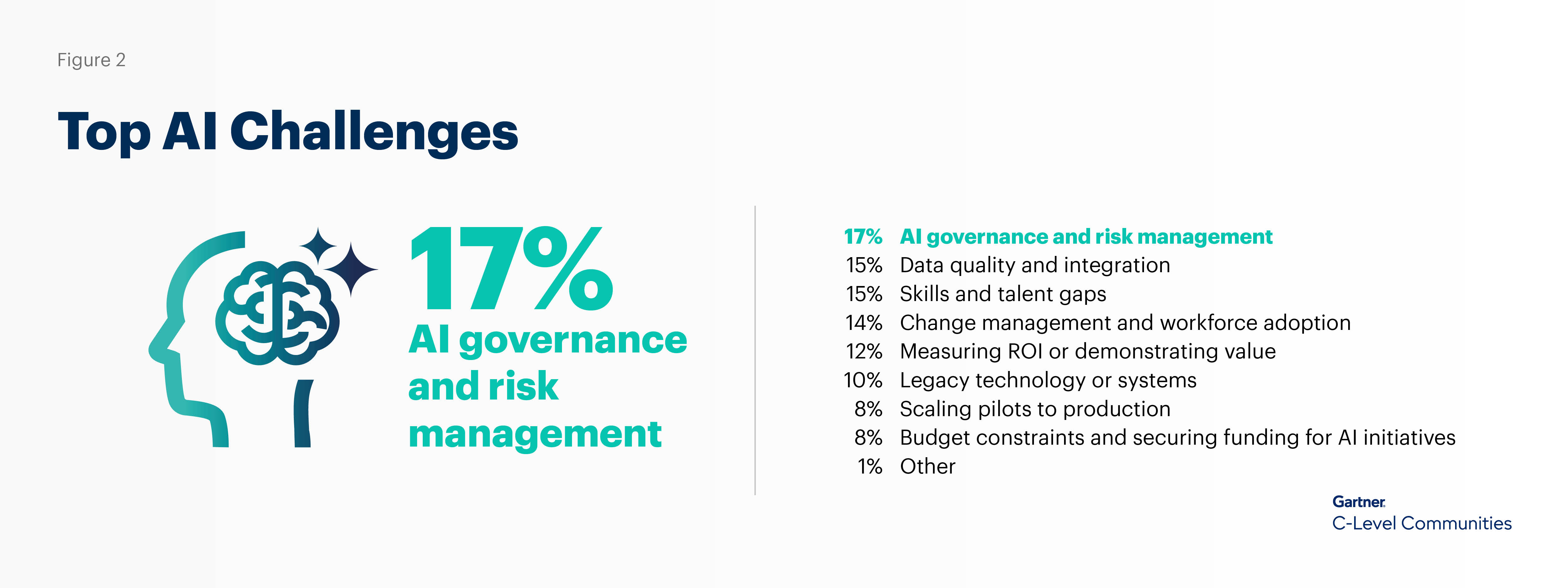
Compared to their C-suite peers, CHROs bring a distinctly people-centric perspective to these issues. Rather than focusing solely on technology and infrastructure, these are their top three challenges:
- Change Management and Workforce Adoption: Building employee confidence, creating time for learning, and overcoming resistance to change.
- AI Governance, Risk, and Compliance: Establishing responsible AI frameworks while managing privacy, regulatory, and organizational risks.
- Skills Gaps and Workforce Readiness: Developing AI literacy, creating new capabilities, and preparing leaders and employees for new ways of working.
When asked how they are addressing these challenges, CHROs described their approaches:
- Change Management: Creating Capacity for Transformation
Change management emerged as one of the most frequently cited barriers to scaling AI. While many organizations have invested in AI tools, HR leaders emphasize that successful adoption depends on giving employees the time, space, and support needed to learn and integrate AI into their daily work. Ongoing communication and engagement are also essential:
“Employees need time to play/try out the tools, but they have full-time jobs. It’s easy to say, ‘AI can make you better, faster,’ but employees need time to figure it out. We expect a lot without allocating sufficient time to learn.”
“Our culture is slow to change, and we are being very deliberate in the roll out and employee training to eliminate some of the fear and resistance that will arise.”
- AI Governance: Balancing Speed and Responsibility
As AI adoption accelerates, CHROs are playing a growing role in governance – especially around workforce data, risk management, and responsible use. While many acknowledge that governance requirements can slow progress, they also recognize their necessity:
“Security and risk governance means our pace is slower than we would like, and fragmented legacy tools and systems make progress challenging. We have to pilot and adapt."
“The challenge is managing the intentionality of the AI tool and the rate of spread. We’re using AI governance to manage and review, but potential applications are speeding up faster than we can review.”
- Talent and Workforce Readiness: Building AI Capabilities at Scale
Developing AI skills across the workforce is another recurring theme. Many CHROs are leading large-scale upskilling efforts to improve AI literacy, prepare managers, and embed AI competencies throughout the organization. Others are recruiting to fill critical gaps:
“Workforce readiness. We’re elevating associate capabilities through training, Build-A-Thons, assessing team- and role-specific use case scenarios, as well as embedding AI literacy as a required competency across the enterprise.”
“Leadership digital dexterity is a significant barrier, being addressed through more bespoke support, benchmarking and executive sponsorship.”
Beyond these themes, CHROs also cite concerns about ROI, investment prioritization, and the unprecedented pace of AI innovation.
One of the biggest barriers is the pace of change in AI. The technology is evolving so quickly that it can be challenging to scale solutions while ensuring processes, teams, and systems keep up.
Trend 3: Executive Concerns Around AI Are Easing as Adoption Matures
Executive concerns surrounding AI remain centered on security, privacy, and governance, but the intensity of these concerns has decreased markedly over the past two years. This suggests that organizations are becoming more comfortable managing AI within existing frameworks.
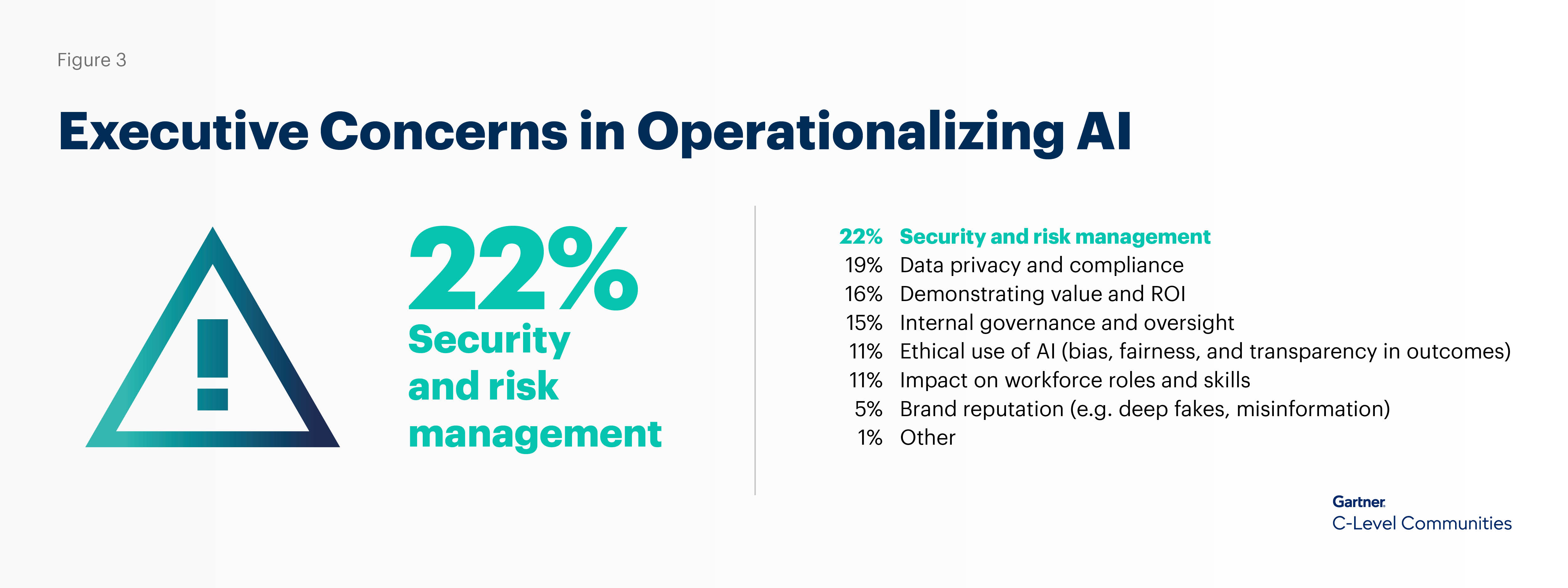
Security and risk management remains the leading concern among executives, cited by 22% of respondents. However, this represents a substantial decline from 2024, when nearly four in five executives (79%) identified it as a top issue. Similar declines were observed across other risk-related categories. Concern about data privacy and compliance dropped from 73% to 19%, while concern around internal governance and oversight fell from 71% to 15%.
As some risks become more manageable, executives are increasingly focused on realizing business value and navigating organizational change. Demonstrating measurable value and ROI, a new addition to the survey, quickly became the third most-cited concern (16%), reflecting growing pressure to translate AI experimentation into tangible business outcomes.
Trend 4: The Human Factor – AI Is Reshaping Work More Than Workforce Size
Despite ongoing concerns in the market about AI-driven job loss, most organizations are not experiencing significant workforce reductions. Notably, none of the survey respondents reported a significant decrease in workforce size, and only 5% indicated a moderate reduction.
Instead, the “human factor” remains central to AI adoption. Survey findings highlight that AI's impact is being felt primarily through changes in how work is performed. For example, 20% of executives report shifts in roles and responsibilities, and 14% said AI adoption has led to the creation of new roles.
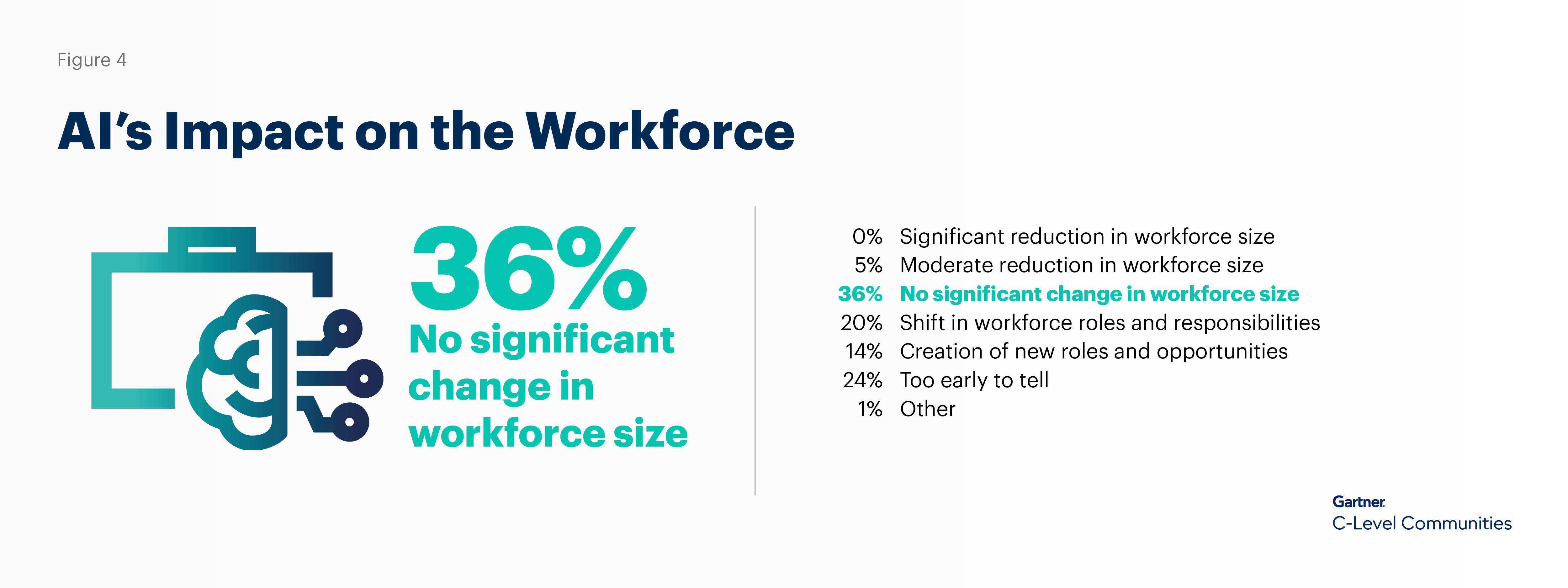
These findings challenge many of the assumptions that have dominated the public conversation around AI. Rather than replacing workers, organizations are largely adapting existing roles, introducing new skill requirements, and redefining how teams operate alongside AI-enabled technologies.
Trend 5: AI Is Creating Capacity for More Human Work
CHROs are increasingly focused on practical AI applications that improve workforce productivity and effectiveness. When asked about the advanced AI capabilities their organizations are prioritizing, HR leaders consistently describe using AI to automate repetitive administrative tasks, enhance decision-making, and create capacity for higher-value work.
In cases where AI is operationalized, we see productivity and efficiency benefits.
Beyond productivity, many CHROs view AI as a tool to support employee wellbeing and create more sustainable ways of working. As one CHRO shared, “It’s an enabler in key competitive advantage capabilities and an enabler of wellbeing by introducing capacity to achieve work life balance.”
Others described using AI as a catalyst for workforce development and talent retention: “We have a general roll out for all employees to ensure we don't lose top talent seeking to advance their skills.”
As organizations mature their AI capabilities, some CHROs are beginning to explore agentic AI as a way to extend these benefits. While adoption remains relatively early, many view it as a natural progression from today's productivity and workflow-focused initiatives.
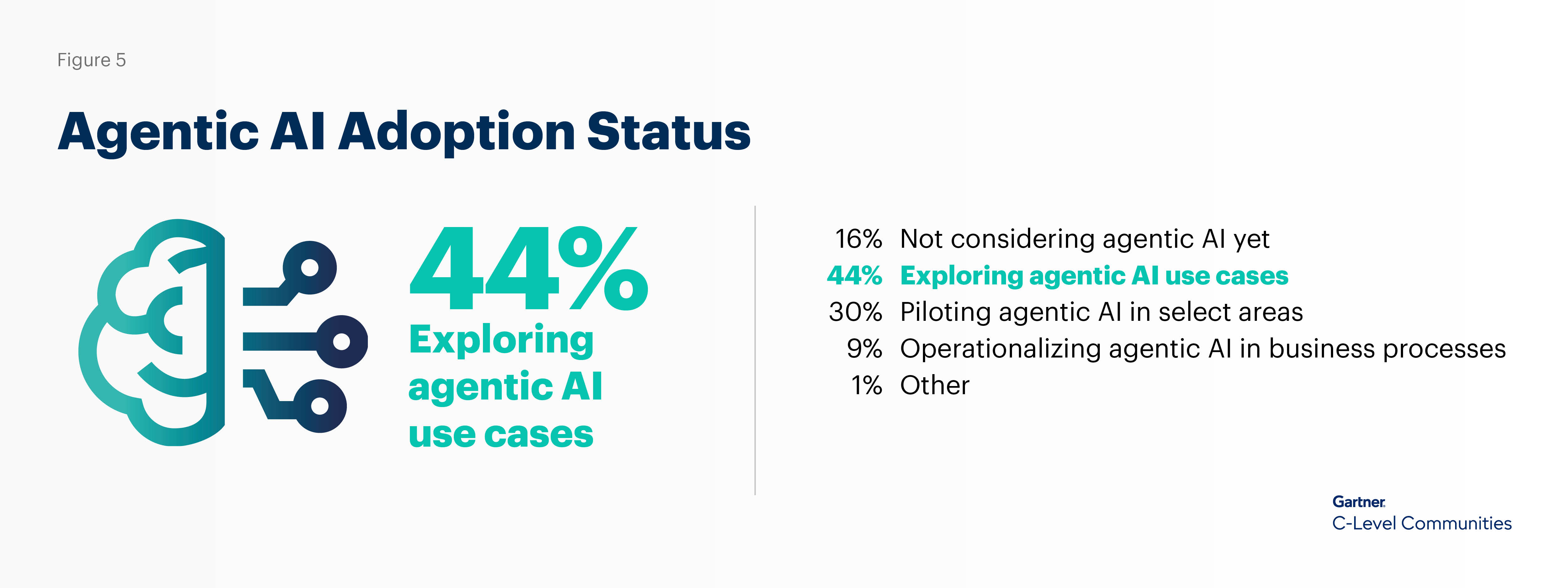
Looking ahead, agentic AI has the potential to amplify many of the business outcomes organizations are already pursuing, including workflow orchestration, intelligent decision support, and autonomous task execution. For CHROs, the opportunity is not simply to deploy AI tools, but to create greater capacity for employees to focus on distinctly human activities that drive organizational success, such as leadership, collaboration, empathy, creativity, and innovation.
Conclusion
As artificial intelligence becomes deeply embedded in enterprise operations, CHROs are playing a pivotal role in shaping how organizations harness its potential. This year’s survey reveals a clear evolution: AI is moving from experimentation to operational execution, with HR leaders at the forefront of integrating the technology into core business processes, workforce strategies, and employee experience.
While challenges around change management, governance, and talent persist, CHROs are meeting them head-on – prioritizing upskilling, responsible governance, and thoughtful change initiatives to ensure AI delivers true value. Notably, concerns about AI-related risks have eased significantly as organizations mature in their adoption, shifting the executive focus toward realizing tangible business outcomes and workforce transformation.
Crucially, the “human factor” remains central. Rather than driving significant workforce reductions, AI is reshaping how work gets done, creating capacity for more human-centric, higher-value activities. CHROs are leveraging AI to automate routine tasks, enhance decision-making, and foster employee wellbeing and development – positioning their organizations for sustainable growth in an AI-powered future.
Looking ahead, CHROs remain overwhelmingly optimistic about AI’s future impact. Eighty-seven percent report a positive outlook on AI's potential to drive meaningful change for both their organizations and their people, reflecting growing confidence that the opportunities outweigh the risks.
As organizations continue their AI journey, CHROs have a unique opportunity to learn from peers navigating similar challenges. Apply to join Gartner CHRO Communities to connect with a trusted network of senior HR executives, share real-world experiences, and gain insights for leading AI-driven workforce transformation.
If you are also a member of Gartner C-Level Communities, sign in to find your next community gathering.
Based on 750 responses to Gartner C-Level Communities’ Community Pulse Survey, June 2026.
By CHROs, For CHROs®
Find your local community and explore the benefits of becoming a member.